The table·6 min
You can keep the hummus.
A nutrition plan that begins by exiling hummus, olive oil, rice, or fruit is usually a plan written for someone else's supermarket.
If you grew up at a Levantine table, you have already been told — by a magazine, a relative, a well-meaning clinician — that the problem is the food you love. Hummus is “too much tahini.” Olive oil is “liquid fat.” Rice is “just carbs.” Fruit after dinner is “sugar at night.” The advice is fluent. It is also, very often, lazy.
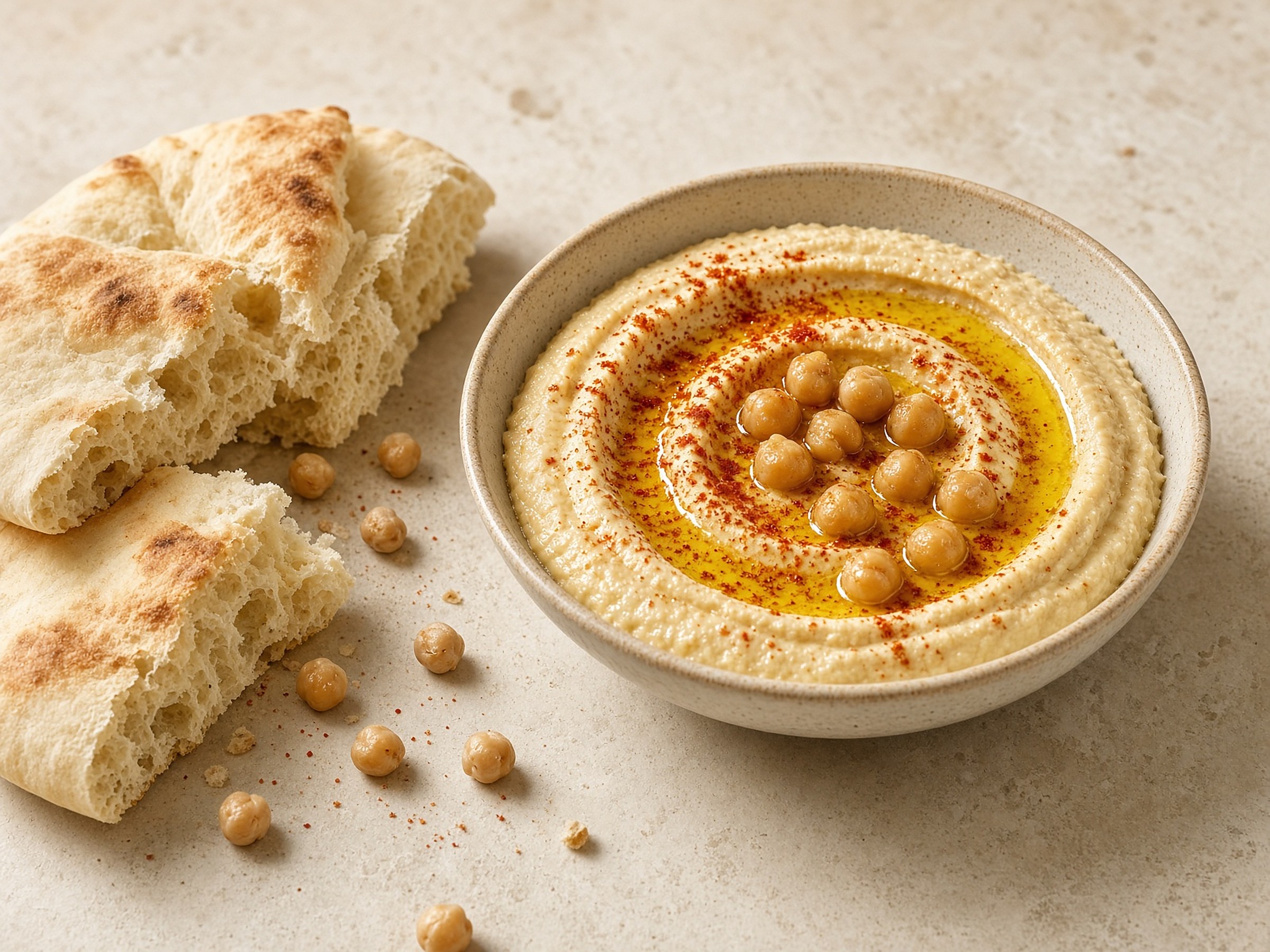
Samar’s work starts from the opposite sentence: you can keep the hummus. Not as a slogan. As a clinical position. Chickpeas, tahini, lemon, and olive oil are a complete, ordinary, excellent food. The question is never “is hummus allowed.” The question is what the rest of the day is doing, how much oil went into the bowl, what arrived with the pita, and whether dinner is the only meal that still feels like a meal.
What actually moves the needle
Registered dietitians spend a lot of training learning not to confuse a food with a pattern. A pattern is: how often, how much, what it sits next to, what it replaced, and whether you can still do it on a Thursday. Hummus three times a week with cucumber and tomato is not the same event as hummus as the only protein between a skipped breakfast and a late rice plate. The food did not change. The pattern did.
- Keep the dish. Change the company it keeps — vegetables, yogurt, a protein that already lives in your kitchen.
- Notice the oil you can see and the oil you cannot: the pour on top, and the pan before anything hits it.
- Bread is not a moral category. It is a timing and portion question, especially if blood sugar is part of the conversation.
- Fruit after dinner is a Damascene habit with a long, defensible history. The issue, when there is one, is usually juice, soda, or the dessert that arrived as well — not the orange.
A Metro Detroit translation
In Fraser, Clinton Township, Madison Heights, and the kitchens that shop the same stores, the table is already Mediterranean in the way researchers mean that word — and also more rice, more bread, more guests than a textbook diagram. Samar does not need you to become a different ethnicity at lunch. She needs an honest account of Tuesday.
If the plan requires you to stop being yourself at dinner, it is the wrong plan.
This note is education, not a personal plan. If a clinician has asked you to change how you eat, bring the actual foods — not a translated grocery list — into the conversation. That is the work.
Kitchen notes are public education. They are not a personal nutrition plan and they do not replace a visit with a registered dietitian or your physician.